

Introduction
Radio Frequency Identification (RFID) technology has become an integral part of numerous industries, from retail and manufacturing to healthcare and logistics. This wireless technology uses radio waves to automatically identify and track objects, revolutionizing how businesses manage inventory, secure facilities, and streamline operations. But what exactly is RFID technology, and how does it work? This article provides a comprehensive exploration of RFID’s fundamental principles, components, and operational mechanisms.
What is RFID Technology?
RFID (Radio Frequency Identification) is a technology that uses electromagnetic fields to automatically identify and track tags attached to objects. These tags contain electronically stored information that can be read from several inches to hundreds of feet away, depending on the type of tag and reader used.
Unlike barcode technology, which requires direct line-of-sight scanning and can only identify a product category, RFID can uniquely identify individual items without visual contact and can read multiple tags simultaneously. This capability makes RFID particularly valuable in environments where rapid, accurate, and hands-free identification is essential.
Core Components of an RFID System

Figure 1: Basic components of an RFID system
An RFID system consists of three essential components that work together to enable the identification and tracking process:
1. RFID Tags
RFID tags, also known as transponders, are the heart of the RFID system. Each tag contains:
- A microchip that stores and processes information
- An antenna that receives and transmits signals
- A substrate (the material holding the components together)
Some sophisticated tags may also include additional features like sensors (for temperature, humidity, etc.) or encryption capabilities for enhanced security.
2. RFID Readers
RFID readers, or interrogators, are devices that emit radio waves and receive signals back from the RFID tags. A typical reader consists of:
- A radio frequency module (transmitter and receiver)
- A control unit with a processor and memory
- An antenna for sending and receiving signals
- A communication interface (USB, RS-232, Ethernet, etc.) to connect with a host computer system
Readers can be fixed (mounted in specific locations like doorways) or handheld, depending on the application requirements.
3. Backend Systems
The backend system includes:
- Middleware that processes and filters data from readers
- A database that stores the information
- Application software that utilizes the collected data for various business purposes
- Network infrastructure connecting all system components
Types of RFID Tags

Figure 2: Comparison of active and passive RFID tags
RFID tags are generally classified into three categories based on their power source:
1. Passive RFID Tags
Passive tags have no internal power source. They draw energy from the electromagnetic field created by the reader. Key characteristics include:
- Lower cost (typically $0.10 to $1.50 per tag)
- Smaller size and lighter weight
- Unlimited operational life
- Shorter read range (typically a few inches to 30 feet)
- Best suited for inventory tracking, access control, and item identification
2. Active RFID Tags
Active tags contain their own power source (usually a battery) that powers the microchip and broadcasts a signal to the reader. Their features include:
- Higher cost (typically $15 to $100 per tag)
- Larger size due to battery
- Limited lifespan (3-8 years depending on battery)
- Longer read range (up to 300 feet or more)
- Ability to store more data and support additional functions
- Ideal for tracking high-value assets, vehicle tracking, and real-time location systems (RTLS)
3. Semi-Passive (Battery-Assisted) RFID Tags
These tags use a battery to power the microchip but rely on the reader’s energy to communicate. Benefits include:
- Longer read range than passive tags
- More reliable performance in challenging environments
- Extended battery life compared to active tags
- Medium cost
- Suitable for monitoring environmental conditions alongside identification
RFID Frequency Ranges
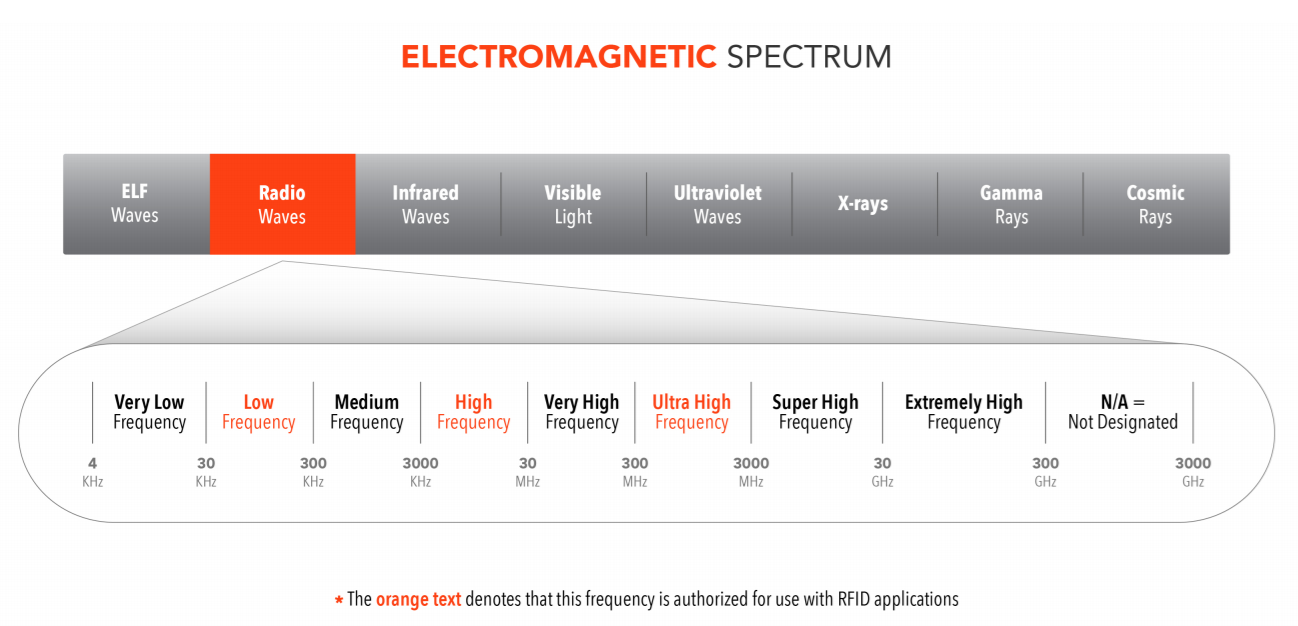
Figure 3: RFID frequency ranges and their applications
RFID systems operate across different frequency bands, each with specific characteristics suitable for various applications:
1. Low Frequency (LF: 125-134 kHz)
- Read range: Up to 10 centimeters
- Slower data transfer rate
- Better performance around metals and liquids
- Applications: Animal tracking, access control, car immobilizers
2. High Frequency (HF: 13.56 MHz)
- Read range: Up to 1 meter
- Medium data transfer rate
- Good balance between range and performance
- Applications: Smart cards, library books, payment systems, NFC applications
3. Ultra-High Frequency (UHF: 860-960 MHz)
- Read range: Up to 12 meters
- Fast data transfer rate
- Susceptible to interference from liquids and metals
- Applications: Supply chain management, retail inventory, asset tracking
4. Microwave Frequency (2.45 GHz and 5.8 GHz)
- Read range: Up to 100 meters (active tags)
- Very fast data transfer rate
- Highly susceptible to environmental interference
- Applications: Electronic toll collection, real-time location systems
How RFID Technology Works
The RFID system operates on a fundamental principle of wireless communication between the tag and reader:
- Activation: The RFID reader emits radio waves via its antenna, creating an electromagnetic field.
- Powering: When a passive RFID tag enters this field, its antenna captures the energy, powering the microchip (active tags use their own power source).
- Data Transmission: The powered microchip modulates the received radio waves, essentially changing the properties of the waves reflected back to the reader.
- Reception: The reader detects these modulated waves and converts them into digital data.
- Processing: This digital data is then processed by the reader and sent to the backend system for further processing, storage, or action.
This entire process takes only milliseconds, allowing for near-instantaneous identification and processing of tagged objects.
Advantages of RFID Over Traditional Identification Technologies
RFID technology offers several significant advantages over traditional identification methods like barcodes:
- No line-of-sight requirement: RFID tags can be read even when hidden or embedded within objects
- Multiple simultaneous readings: Dozens or even hundreds of tags can be read at once
- Greater data capacity: RFID tags can store more information than barcodes
- Dynamic data: Some RFID tags allow for updating information, unlike printed barcodes
- Durability: Tags can withstand harsh environments, chemicals, and temperature variations
- Automation potential: Reduces human intervention and error in identification processes
- Enhanced security: Sophisticated encryption and authentication capabilities
Common Applications of RFID Technology
Retail
- Inventory management
- Anti-theft protection
- Self-checkout systems
- Supply chain visibility
Healthcare
- Patient identification
- Equipment tracking
- Medication authentication
- RFID wristbands for access control
Manufacturing
- Production line automation
- Quality control
- Asset tracking
- Work-in-progress monitoring
Logistics & Transportation
- Shipment tracking
- Warehouse management
- Container identification
- Toll collection systems
These are just a few examples of how RFID applications are transforming numerous industries with efficient identification and tracking capabilities.
Conclusion
RFID technology represents a remarkable advancement in automatic identification and data capture systems. Its ability to uniquely identify, track, and manage objects without physical or visual contact has transformed countless industries and processes. As the technology continues to evolve with reduced costs, increased performance, and novel applications, RFID will undoubtedly remain a cornerstone of modern identification systems and a key enabler of Internet of Things (IoT) initiatives.
Understanding the fundamental principles and components of RFID systems provides a solid foundation for exploring how this versatile technology can be leveraged to solve complex business challenges across various industries. Whether implementing inventory management, enhancing security systems, or developing sophisticated tracking solutions, RFID technology offers powerful capabilities that continue to drive innovation and efficiency.

0 Comments